
 |
| Korean Cuisine |
Korean
food is mostly nutritious and fermented. Consequently, it is considered healthy
and a good defense against cancer. It is the list of The Top 10 Korean foods
that you have to try:
 |
| Kimchi |
Kimchi
is the most famous Korean food. It is salted and fermented Korean cabbage,
presented as a side dish in any meal. It is rich in vitamins and minerals. Kimchi
is the national dish of Korea. As we know as an Indonesian we also know and eat
several fermented food such as tempe, tahu, oncom, yoghurt, bread, etc. In the
case of kimchi the cabbage is coated leaf by leaf in a delicious spicy mix of
hot pepper flakes, garlic, chives, onion, pear juice, and more. It is then able
to be eaten right away or you can leave it out of the refrigerator for two or
three days to start the fermentation process. As it ferments it develops a rich
and slightly sour flavor. It lasts for months and is also used as the base for
many other dishes such as kimchi stew and even as a filling for kimbap (Korean
sushi). Kimchi is such an important dish in Korea that it is eaten with
breakfast, lunch, and dinner.
 |
| Bibimbap |
Bibimbap.
In Korean, “bibim” means “mixed” and “bap” means rice. All of the ingredients
except the meat (which is optional) are prepared in advance so you can add them
at room temperature to the top of hot steamed rice. You then quickly fry and
add the meat and a sunny-side up egg to the top. Bibimbap is usually served
with a spicy sauce made from gochujang (Korean hot pepper paste) which you can
add to your liking – allowing you to control how hot it is. You then use your
spoon (Korean food is always served with metal chopsticks and a spoon) to
“bibim” it all until it is completely mixed together. This really is a taste
sensation and it really is impossible not to fall in love at first bite. I have
try it several times, but in Indonesia off course. If we compare with our food,
it will be nasi rames i
guest..hahahah
 |
| Bulgogi |
Bulgogi,
Korean barbeque, is thinly sliced sirloin marinated in soy sauce with sasame
oil and garlic, among other condiments. Typically in the west we eat bulgogi on
a korean barbecue – a hot plate in the middle of the table. But in Korea this
is just one of many ways. It can be made into a stew or as the basis for other
dishes. There are as many recipes as their are uses. The end result is a
delicious sweet, savory, and soft slice of meat. As for me I prefer to eat it
with small amount of rice and dipping sauce in a lettuce leaf, just like
Samgyupsal. It is also incredibly low fat and very healthy.
 |
| Japchae |
Japchae
is one of the most popular Korean dishes both inside and outside of Korea and
when you taste it you will understand why. Originally japchae was made without
noodles – it was invented for the King by one of his chefs and he loved it so
much that it became famous across Korea. In more recent times the noodles were
added and now they are an essential element to the dish. The noodles used are
sweet potato starch noodles which give japchae its very distinct chewy texture.
The vegetables are all lightly cooked so they retain all their flavor. This is
definitely a great alternative to the typical (and often bland) stir fry we all
cook at home when we want “Chinesen”. That will be very similar with the capcay
we often eat in Indonesia.
 |
| Yangnyeom Tongdak |
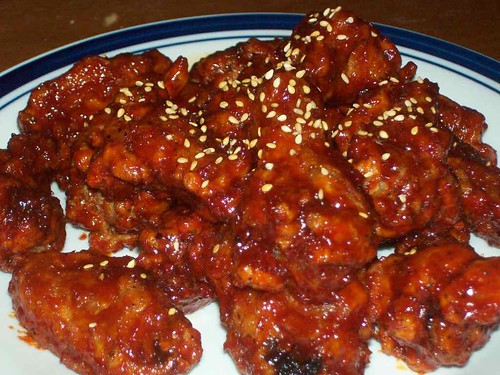
Yangnyeom Tongdak (seasoned fried chicken). This fried
chicken has to be tasted to be believed. When you bite into a piece of this
chicken you are initially met with a sticky, sweet, spicy red sauce. Maybe like
ayam balado for us Indonesian. This
really is one of the most delicious Korean foods ever invented. In Korea there
are many shops selling their own special version of yangnyeom tongdak and they
deliver until the late house of the night. But home made is always better. This
recipe is particularly good as it shows (because of the addition of ketchup)
how Koreans are willing to adopt foreign flavors and use them to their
advantage. You need to try this as soon as possible.
 |
| Hoeddeok |
Hoeddeok,
is sweet syrupy Korean Pancake. If you have a sweet tooth you are guaranteed
satisfaction with this amazing pancake sold by street vendors. It is a little
more complex than a western style pancake because it is made with a yeast dough
but the effort is well worth it. The dough (virtually identical to a western
bread dough) is filled with a mixture of cinnamon, brown sugar, and chopped
walnuts and fried in a lightly oiled pan until the filling has melted into a
syrup. This really is the queen of pancakes and it is incredibly popular with
children. Try this out next time the kids want pancakes for breakfast – they
will love you for it. And if you don’t like the sound of the filling or don’t
have a sweet tooth, just fill it with mozzarella cheese instead.
 |
| Dakjuk |
Dakjuk
(chicken porridge) or bubur ayam in Indonesia..hahah.. Essentially you boil a
chicken in a huge pot of water with onions and a lot of garlic – then you add
sushi rice and cook it until the chicken is done. The end result is a thick
stew (which Koreans refer to as a porridge even though it has no oats) caused
by the rice breaking down bursting with rich chicken and garlic flavor. You
tear the chicken up and eat it with the porridge. This is a meal you will make
again and again because it really is super easy.
 |
| Ttokbokki |
Ddukbokkie
is the delicious smell of Korean cities at night. In large Korean cities like
Seoul, the streets are filled with vendors selling their own special recipe
versions of the most popular street food. Ddukbokkie (it is pronounced roughly
like “dok-bok-ee”) is one of the most popular and it comes in various styles. The
sauce is spicy but it is also very sweet and packed with an immense amount of
flavor. The spiciness is cut by the long cylindrical rice cakes which, when
cooked, become chewy and soft. I think it’s fine if we want to try the original
one even I already tested it in several Korean restaurant in Indonesia.
 |
| Seolleongtang |
Seolleongtang
is an incredibly popular soup in Korea – there are even restaurants who
specialize in making just it. Of all the items on this list, seolleongtang is
the most time consuming as you must boil the beef bones (typically ox leg bones
but you can make do with ox tail) for hours and hours to release all of the
calcium which gives it the very distinctive white look. But don’t be fooled by
the color – this is the beefiest tasting soup you can imagine! When you boil
the bones you can also add a large piece of beef and radish which you slice and
add to the soup at the last minute. While this is a great winter soup it is
also delicious in summer. It also makes a huge quantity so you can make it on
the weekend and consume it during the week. In Korea this might be eaten for
breakfast – not just dinner – as Korean’s typically have soup, rice, and side
dishes for breakfast.
 |
| Soondubu Jiggae |
Soondubu
jiggae is a Korean stew (jiggae) – thicker than a soup but thinner than a
porridge. When cooked in the traditional way all of the cooking is done in just
the one dish. This makes it very easy to clean up afterwards – a job we all
hate. It starts with a delicious fish stock and a little beef to deepen the
flavor then finished off with fresh shell fish, hot pepper flakes, silken tofu,
and eggs which are optional. The small amount of beef is typical of Korean food
and illustrates how healthy it is – the meat is used for flavor rather than
stomach filling. This is a dish everyone should try – it is really one of the
nicest ways to introduce someone to tofu which picks up all of the flavors of
the stew while adding a soft comforting texture. Eat it with rice and side
dishes for a complete meal.


No comments:
Post a Comment
komentar ga bayar kok..hohoho